
Derivative Copyright: An Overview
Intellectual property law is a complex but essential framework that governs the ownership and use of creative works. Among its many branches, Derivative Copyright plays a crucial role in protecting adaptations, modifications, and new works based on existing copyrighted material. Understanding Derivative Copyright is vital for creators, publishers, and businesses who navigate the thin line between innovation and infringement.
This article provides a comprehensive overview of Derivative Copyright, its legal basis, applications, limitations, and global relevance.
1. Introduction to Derivative Copyright
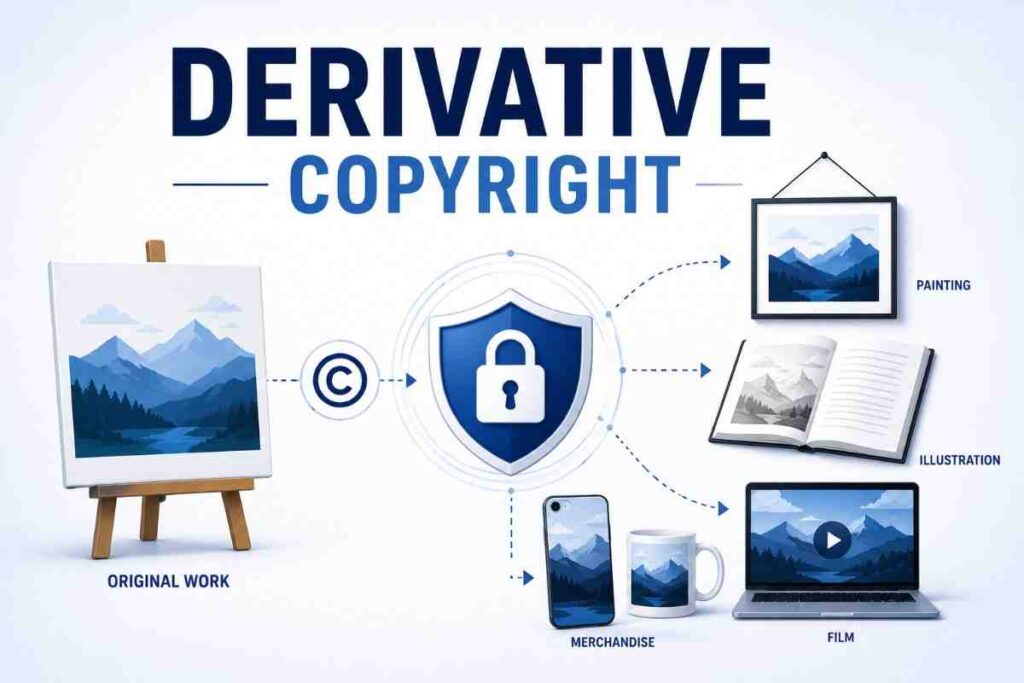
Derivative Copyright refers to the copyright protection granted to a work that is based on or derived from one or more preexisting works. It protects the creative contributions of an author who adapts, transforms, or modifies an existing copyrighted work. Examples include:
- Translations of books into different languages.
- Film adaptations of novels or plays.
- Musical arrangements or remixes of preexisting compositions.
- Art inspired by another work.
- Software modifications or new versions of existing programs.
Unlike original works, Derivative Copyright does not replace the rights of the original author; instead, it coexists with them. This dual protection ensures that both the original creator and the adapter are recognised and compensated for their contributions.
2. Legal Basis of Derivative Copyright
A. International Framework
The concept of Derivative Copyright is recognised in major international treaties and agreements, including:
- Berne Convention (1886): Protects literary and artistic works, including adaptations, translations, and dramatisations.
- WIPO Copyright Treaty (1996): Extends protection to digital adaptations and multimedia works.
- TRIPS Agreement (1995): Requires member countries to provide protection to derivative works under copyright law.
B. National Copyright Laws
Most countries recognise Derivative Copyright under their national copyright statutes. For example:
- United States: The Copyright Act of 1976 explicitly grants copyright in derivative works under Section 103.
- United Kingdom: Adaptations and translations are protected under the Copyright, Designs and Patents Act 1988.
- India: The Copyright Act 1957 protects adaptations and arrangements of existing works, including translations and cinematographic adaptations.
In all jurisdictions, a derivative work must contain sufficient originality contributed by the adapter to qualify for protection.
3. Types of Derivative Works
Derivative Copyright encompasses a wide range of creative modifications, including:
- Translations: Rendering a literary, musical, or artistic work into another language.
- Musical Arrangements: Rewriting a musical composition while retaining elements of the original.
- Film or Theatrical Adaptations: Converting novels, plays, or short stories into movies, stage plays, or TV shows.
- Artistic Transformations: Creating new artworks inspired by existing images, sculptures, or photographs.
- Software Derivatives: Modifying source code to create new programs, versions, or patches.
- Parodies and Satirical Works: In some jurisdictions, derivative rights include transformative humour or commentary.
Each type of derivative work requires originality and creativity, beyond mere reproduction of the underlying work.
4. Originality Requirement in Derivative Copyright
For a derivative work to receive Derivative Copyright protection, it must involve a sufficient level of originality. Key considerations include:
- Creative Contribution: The adapter’s work must add new expression, arrangement, or insight.
- Substantiality: The contribution should not be trivial; minor modifications generally do not qualify.
- Independence from the Original: While based on a preexisting work, the derivative must demonstrate originality in its structure, style, or content.
For example, translating a poem into another language requires creative choices regarding diction, rhythm, and nuance. A simple mechanical translation with no creative input may not qualify for Derivative Copyright.
5. Rights Conferred by Derivative Copyright
Once recognised, Derivative Copyright provides the adapter with exclusive rights over the derivative work. These rights typically include:
- Reproduction of the derivative work.
- Distribution and sale of copies.
- Public performance or display of the derivative work.
- Licensing the derivative work to third parties.
- Creating further adaptations or modifications of the derivative work.
It is important to note that the derivative copyright does not grant the adapter the right to use the original work without permission. The original author’s consent is generally required before creating a derivative work.
6. Relationship Between Original and Derivative Copyright
The relationship between original and derivative works is central to understanding Derivative Copyright:
- Original Work Protection: The original author retains all rights to the initial work.
- Derivative Work Protection: The adapter’s contribution is separately protected.
- Permission Requirement: Most jurisdictions require authorisation from the original author to create a derivative work, unless the original work is in the public domain or the adaptation qualifies as fair use or a similar exception.
This dual protection ensures a balance between incentivising innovation and respecting the rights of the original creator.
7. Licensing and Permissions
Creating a derivative work often requires obtaining permission from the original author. Licensing agreements are commonly used to formalise this relationship. Key elements include:
- Scope of Use: Defines which adaptations are allowed (translations, adaptations, remixes).
- Territory: Specifies geographic regions where the derivative work can be distributed.
- Duration: The time period during which the license remains valid.
- Financial Terms: May include royalties, lump-sum payments, or profit-sharing.
- Moral Rights Considerations: Ensures that the original author’s reputation is not harmed.
Proper licensing ensures compliance with copyright law and protects both parties from infringement claims.
8. Fair Use and Derivative Works
In some jurisdictions, Derivative Copyright interacts with fair use (US) or fair dealing (UK, India) doctrines. Key points include:
- Parodies and Satire: Transformative works may be permitted without explicit authorisation.
- Educational Use: Some derivative works created for teaching or research may be exempt.
- Criticism or Commentary: Reviews and critiques often qualify as derivative works under fair use.
However, the limits of fair use vary widely across countries and require careful legal consideration.
9. Infringement of Derivative Copyright
Unauthorised creation, distribution, or sale of a derivative work constitutes infringement. Examples include:
- Adapting a novel into a film without the author’s consent.
- Translating a copyrighted book without a license.
- Remixing a song for commercial release without permission.
Consequences of infringement can include:
- Injunctions preventing further use.
- Monetary Damages or compensation to the original author.
- Destruction or Seizure of infringing copies.
- Legal Costs for litigation.
In many countries, derivative copyright infringement is treated as seriously as infringement of the original work.
10. Derivative Copyright in Software and Technology
Software often involves derivative works, especially when developers create modifications, plugins, or new versions of existing programs. Key points include:
- Open-source software licenses often govern derivative works.
- Modifying proprietary software without a license generally constitutes infringement.
- Courts consider whether the derivative software contains original expression or merely reproduces functional elements.
In the digital age, Derivative Copyright in software has become increasingly important for tech companies, startups, and AI developers.
11. Global Perspectives on Derivative Copyright
A. United States
- Copyright Act of 1976 explicitly addresses derivative works in Section 103.
- Court cases like Morris v. California and Anderson v. Stallone have clarified the scope of derivative rights.
- Digital adaptations and software derivatives are protected under modern interpretations.
B. United Kingdom
- The Copyright, Designs and Patents Act 1988 protects translations, adaptations, and arrangements.
- Exceptions exist for research, education, and parody, aligning with EU directives.
C. European Union
- EU copyright directives protect derivative works across member states.
- The InfoSoc Directive (2001/29/EC) standardises rights for adaptations and translations.
- The EU emphasises moral rights and attribution for original authors.
D. India
- The Copyright Act, 1957 recognises cinematograph films, translations, adaptations, and arrangements as derivative works.
- Section 14(1)(a) ensures that derivative works cannot infringe on the original author’s rights.
- India also incorporates digital rights, covering adaptations in online and multimedia formats.
E. China
- China’s Copyright Law (2020 amendment) explicitly protects derivative works, including adaptations, compilations, and translated works.
- Enforcement has become stricter due to increased creative and technological output.
12. Challenges in Derivative Copyright
- Determining Originality: Courts often struggle to decide whether a derivative work contains sufficient originality.
- Digital Transformations: AI-generated works and automated translations blur the lines between derivative and original creations.
- Global Enforcement: Differing laws and interpretations create cross-border disputes.
- Licensing Complexity: Negotiating permissions for adaptations can be legally and financially challenging.
- Balancing Interests: Protecting both original and derivative authors while ensuring public access remains complex.
13. Economic and Cultural Significance
Derivative Copyright contributes significantly to global creative industries:
- Books and Films: Adaptations and translations expand the reach of literary works.
- Music Industry: Remixes, cover songs, and arrangements create new revenue streams.
- Software and Gaming: Updates, mods, and derivative programs foster innovation.
- Art and Design: Reinterpretations and adaptations drive cultural exchange.
By protecting derivative works, copyright law incentivises creative reinterpretation, which enriches culture, commerce, and innovation.
14. Future Trends in Derivative Copyright
The evolution of technology and globalisation is shaping the future of Derivative Copyright:
- AI-Generated Works: Questions about authorship, copyrightability, and licensing are emerging.
- Digital Licensing Platforms: Blockchain and smart contracts facilitate secure derivative rights management.
- Global Standardisation: WIPO and international treaties may further harmonise derivative copyright rules.
- Creative Collaboration: Crowdsourcing, remix culture, and collaborative digital media increase reliance on derivative rights.
Future reforms will likely focus on clarifying ownership, ensuring fair remuneration, and addressing AI-created adaptations.
15. Conclusion
Derivative Copyright is a vital aspect of intellectual property law that ensures creators of adaptations, translations, and transformations are protected. It encourages innovation and creativity while respecting the rights of original authors.
Globally, Derivative Copyright frameworks exist in almost every country, guided by treaties like the Berne Convention, WIPO Copyright Treaty, and TRIPS Agreement. While challenges such as digital adaptations, AI-generated works, and cross-border enforcement remain, derivative rights continue to promote cultural, artistic, and technological advancement worldwide.
Understanding Derivative Copyright is essential for authors, filmmakers, musicians, software developers, and businesses seeking to innovate responsibly while honouring existing works.
Need Help Protecting Your Innovation?
We provide patent, trademark and product development services. Get in touch to turn your idea into a market ready product.
Learn More