
Character Copyright in Gaming: Protecting Iconic Digital Creations
The gaming industry has evolved into one of the largest entertainment sectors globally, with revenues surpassing those of movies and music combined. Central to the appeal and success of many games are the characters they feature—from heroic protagonists and antiheroes to fantastical creatures and mascots. These characters are often the most recognisable and marketable aspects of a game, serving as symbols of franchises and driving merchandise sales.
To protect these valuable assets, game developers and publishers rely on Character Copyright. This area of intellectual property (IP) law ensures that original characters are legally safeguarded against unauthorised use, copying, or adaptation. Understanding the nuances of Character Copyright is essential for developers, artists, publishers, and even gamers who want to appreciate the legal framework protecting their favourite game characters.
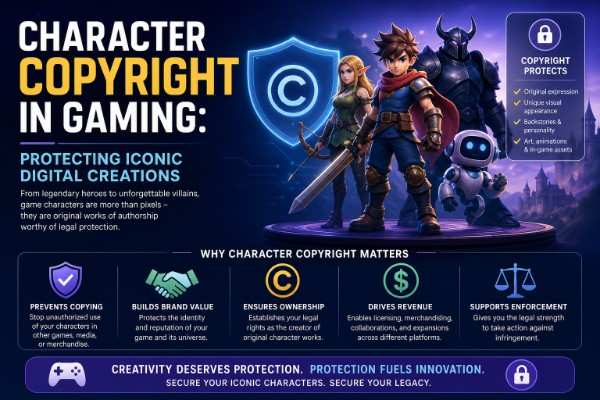
What Is Character Copyright?
Character Copyright is a form of copyright protection specifically applied to original characters in creative works. While copyright traditionally protects literary, artistic, and audiovisual works, courts have recognised that well-defined characters can also be independently protected, even apart from the story or game in which they appear.
Key Criteria for Character Copyright
- Originality: The character must be a product of creative effort, not copied from another work.
- Distinctiveness: Characters must have unique traits—appearance, personality, backstory, or other distinctive elements.
- Identifiability: The character must be recognisable, meaning it can be distinguished from generic figures or stock characters.
For example, Mario from Nintendo’s franchise is a character with a distinct look, personality, and history, making him eligible for Character Copyright protection.
Importance of Character Copyright in Gaming
The gaming industry relies heavily on the popularity and recognition of its characters. Character Copyright serves several critical functions:
1. Protecting Creative Investment
Developing a character often involves significant investment in design, animation, voice acting, and marketing. Copyright protection ensures that other developers or entities cannot simply copy these characters and benefit from someone else’s creative work.
2. Supporting Merchandising and Branding
Characters often transcend the games themselves, appearing in merchandise, movies, and promotional material. Character Copyright enables creators to control how their characters are used commercially, maximising revenue potential.
3. Encouraging Innovation
Knowing that characters are legally protected encourages artists and developers to innovate, creating unique and compelling figures rather than relying on derivative or generic designs.
4. Legal Recourse Against Infringement
When a character is protected under copyright, the rights holder can take legal action against unauthorised use, including reproductions, adaptations, or derivative works in other games, media, or products.
Legal Framework for Character Copyright
Character Copyright protection falls under broader copyright law, but courts have developed specific standards to determine when a character is eligible for protection.
1. U.S. Copyright Law
In the United States, copyright law recognises characters as protectable if they meet the criteria established in the landmark case Nichols v. Universal Pictures (1930) and subsequent rulings. Courts often consider:
- Well-defined characters: Characters with unique traits, appearance, or personality are more likely to receive protection.
- Story being separable: Even if the overall story is not copyrighted, distinctive characters may be protected independently.
- Specificity of traits: Generic or stock characters, like a “princess” or “wizard,” without distinguishing features, generally do not qualify.
The U.S. Copyright Office also recognises that characters may be protected as part of audiovisual works or as literary works, depending on their creation medium.
2. European Copyright Law
European Union (EU) member states have harmonised copyright laws under directives, but specifics vary by country. Generally, EU copyright law protects original works, and courts have extended this protection to characters with distinctive visual or narrative traits.
3. Other Jurisdictions
- Japan: Protects manga and video game characters extensively due to their cultural significance.
- China: Copyright protection for gaming characters exists, though enforcement has been historically challenging.
- India: Copyright law protects original artistic works, which can include characters in games if they meet originality criteria.
Understanding jurisdictional differences is crucial for game developers who operate internationally, as enforcement and recognition of Character Copyright may vary.
What Makes a Character Copyrightable in Games?
Not all game characters automatically qualify for copyright protection. Certain elements enhance eligibility:
1. Visual Distinctiveness
Characters with unique appearances—costumes, facial features, hairstyles, colours, and accessories—are more likely to be protected. For instance:
- Link from The Legend of Zelda has a distinctive green tunic, cap, and sword.
- Sonic the Hedgehog’s blue colour, spikes, and shoes make him visually unique.
2. Personality and Behaviour
A character’s traits, personality, and behavioural patterns can contribute to copyrightability. Courts have recognised that a character’s way of speaking, moral choices, and quirks can make them distinctive.
3. Backstory and Context
Characters with detailed histories, motivations, and roles in the game’s story gain stronger protection. For example, Lara Croft’s backstory as an archaeologist adventurer adds to her distinctiveness.
4. Recognizability Across Media
Characters that are iconic and identifiable even outside the original game—through animations, movies, or merchandise—strengthen the claim for Character Copyright.
Character Copyright vs. Trademark
While Character Copyright protects creative expression, trademarks protect brand identifiers like names, logos, or symbols. Both are often used in gaming:
- Copyright: Protects the artistic design and personality of the character.
- Trademark: Protects the character’s name or likeness as a brand for products and merchandise.
For instance, Pikachu from Pokémon is protected under Character Copyright for its design and under trademark law for its commercial use on merchandise. Combining copyright and trademark protection gives creators robust legal tools.
Challenges in Character Copyright Enforcement
Enforcing Character Copyright can be complex due to the nature of digital content and derivative works.
1. Infringement by Derivative Characters
Some games create characters that closely resemble existing ones without copying them exactly. Determining whether such characters infringe on Character Copyright often requires legal scrutiny of visual and behavioural similarities.
2. Fan Creations and Mods
Fan art, mods, and derivative games often use copyrighted characters. While many developers tolerate or encourage fan creativity, these creations can technically infringe copyright, leading to potential legal disputes.
3. International Enforcement
Global gaming markets complicate enforcement. A character copyrighted in one country may be reproduced in another jurisdiction with weaker enforcement or different standards for originality.
4. Balancing Creativity and Legal Risk
Developers must navigate between creating characters that are inspired by existing archetypes and avoiding copyright infringement. This requires careful design, documentation, and legal consultation.
Notable Cases of Character Copyright in Gaming
1. Blizzard Entertainment – World of Warcraft
Blizzard has protected characters from World of Warcraft through copyright and trademarks. Unauthorised use of characters like Arthas or Illidan in other games or merchandise has been met with legal action.
2. Capcom – Street Fighter
Capcom has defended the copyrights of characters such as Ryu and Chun-Li against unauthorised reproductions and derivative works. The distinct visual and behavioural traits of these characters were central to legal protection.
3. Nintendo – Mario and Link
Nintendo is known for aggressively protecting its iconic characters. Through Character Copyright and trademarks, the company has prevented unauthorised use of Mario, Luigi, and Link in various contexts, from fan games to merchandise.
These cases underscore the importance of Character Copyright in preserving the value and integrity of gaming characters.
Best Practices for Protecting Characters in Games
For developers and publishers, proactive protection of game characters is essential:
- Document Character Development: Maintain detailed records of design sketches, personality traits, and backstories to establish originality.
- Register Copyrights Where Possible: While copyright exists automatically upon creation, registration can strengthen legal claims, especially in the U.S.
- Use Trademarks for Commercial Use: Protect character names, logos, and likenesses for merchandising and branding purposes.
- Monitor for Infringement: Regularly check for unauthorised use of characters online, in games, or in merchandise.
- Consult Legal Experts: Intellectual property lawyers can provide guidance on copyright, trademark, and international enforcement strategies.
The Future of Character Copyright in Gaming
The gaming industry continues to evolve rapidly, and so does the legal landscape of Character Copyright. Emerging trends include:
- Digital Avatars and AI-Generated Characters: AI may increasingly generate game characters, raising questions about ownership and copyright.
- Cross-Media Expansion: Characters appearing in movies, TV shows, and merchandise will require integrated copyright and trademark strategies.
- Global Standardisation: International efforts to harmonise copyright rules could simplify cross-border enforcement for gaming characters.
The growing importance of esports, virtual reality, and metaverse environments also emphasises the need for robust Character Copyright protections to maintain creative and commercial control.
Conclusion
Character Copyright plays a pivotal role in the gaming industry by protecting original, distinctive characters from unauthorised use. These protections safeguard creative investments, support merchandising and branding, encourage innovation, and provide legal recourse against infringement.
As games become more immersive and cross-media opportunities expand, developers and publishers must carefully navigate the complexities of Character Copyright. By combining legal protections, strategic licensing, and proactive monitoring, gaming companies can ensure that their characters continue to captivate audiences while preserving the economic and cultural value of their creations.
Understanding and leveraging Character Copyright is essential for anyone involved in game development, publishing, or IP management. Protecting characters is not just about safeguarding creativity—it’s about sustaining the identity, profitability, and longevity of a game franchise in a competitive global market.
Need Help Protecting Your Innovation?
We provide patent, trademark and product development services. Get in touch to turn your idea into a market ready product.
Learn More